Tanzania
Above Africa
S
Steve Evans2018
Passport lost in the departure lounge, a pee bottle emptied in entirely the wrong place, and nineteen hours to the roof of Africa and back down again.
The trouble started before I'd left the country. I was two drinks in at the airport lounge — a London Pride, then a champagne, when I discovered my passport wasn't where I'd put it. Twenty stress-relieving minutes later it turned up in my shorts pocket, exactly where I'd put it, and I decided this was as good a time as any to stop worrying about the currency I'd left on the kitchen table at home. There'd have been time to go back for it. I just hadn't known that yet.
We boarded two hours late, someone announced we'd be stopping in Kuwait, and I fell asleep somewhere around dinner and Isle of Dogs — not the place, the Wes Anderson film, which felt like an oddly appropriate thing to be half-watching on the way to a mountain in Tanzania — and woke up as we landed in Dubai at five in the morning local time, missing my connection. My new connection to Nairobi wasn't for another six hours, so I was decanted into a soulless airport hotel, lunch included, to wait it out.
Nairobi itself lasted just long enough for an intro to Tusker beer at the airport bar before a prop-plane hop down to Kilimanjaro. Then came the visa: ultra-slow paper processing, followed by a hi-tech US-style photo-and-ten-finger-print rig that also stuck my face to the visa itself. I never did work out why they needed both the carbon-copy form and the biometric photo. Bureaucracy, doubled.
Moshi
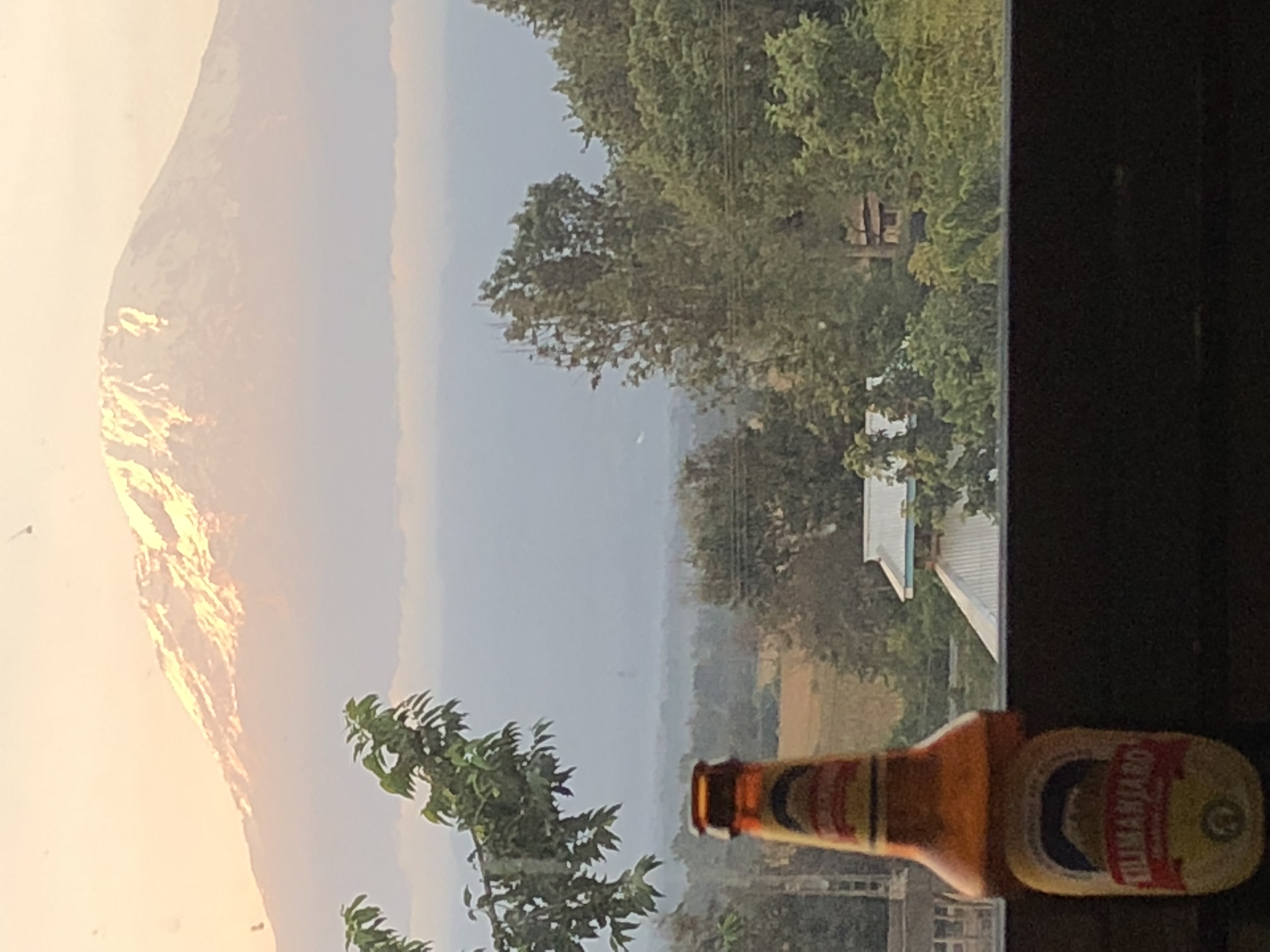
The hotel in Moshi was basic but the sleep — 2am to 9am — was the best I'd had in two days. Less good: my reading glasses hadn't survived the flight. I wandered around the small town until a local artist named Sylvester, who'd once worked as a mountain guide, took me to a tiny shop where I paid roughly six times what the same glasses would cost in a UK poundland shop. I also tipped him generously, mostly to avoid being talked into buying one of his rudimentary sketches. Later I changed some dollars at a small exchange shop that came with its own armed guard standing outside — the kind of detail that makes you feel very much like a tourist and not at all like you're in danger, somehow both at once.
That afternoon was the expedition briefing, run by head guide Davis, who was stern and scary in opening but turned out to be entirely reasonable once he was going through everyone's kit bag by bag. He was thorough to the point of interrogation — you need all your layers for the summit, no exceptions — and decided my sleeping bag wasn't up to the job, so I was issued a silk liner to compensate.
The rest of our group assembled over that first evening: Veena and Bimal, two Indian doctors working in Chicago; Sam, a bartender from Texas; and Leah, a law graduate from Norwich who, by her own admission, never used one word where six would do. Five of us, about to be looked after by a small army of porters.
Onto the mountain
The gate itself took longer to get through than I'd expected — two and a half hours just to arrive, another ninety minutes to register and get the bags weighed. Every porter's load is checked against a strict 20kg limit, and watching the queue of men with towering packs balanced on their heads and shoulders, all waiting patiently to be weighed and waved through, was its own kind of introduction to how this mountain actually works. It isn't really climbed by five trekkers. It's climbed by a small village that happens to be moving in the same direction as you.
The first section was proper rainforest — blue monkeys swinging overhead, porters overtaking us at pace with their loads balanced improbably on their heads or necks, off to set up camp before we'd even arrived. Davis led with a rucksack that dwarfed anything we were carrying; Redman and Emmanuel, the other two guides, walked with the five of us and made sure nobody got left behind. When we finally reached the first camp, thirty or forty porters and crew put on an impromptu welcome of singing and dancing. For five paying guests. It was a lot of noise, and I loved every second of it.
That first night on the mountain was cold and loud with wind, and my feet were freezing until I remembered a trick from a stay in a wigwam in Montana years earlier: bin liners over the socks inside the sleeping bag. It worked. We were up at six the next morning — although "up" and "moving" turned out to be two very different things, since we didn't actually start walking until eight — for six hours' climbing to 3,800m before dropping back to camp at 3,600m. Good pace, cold start, warm middle, first proper glimpse of the summit far above.
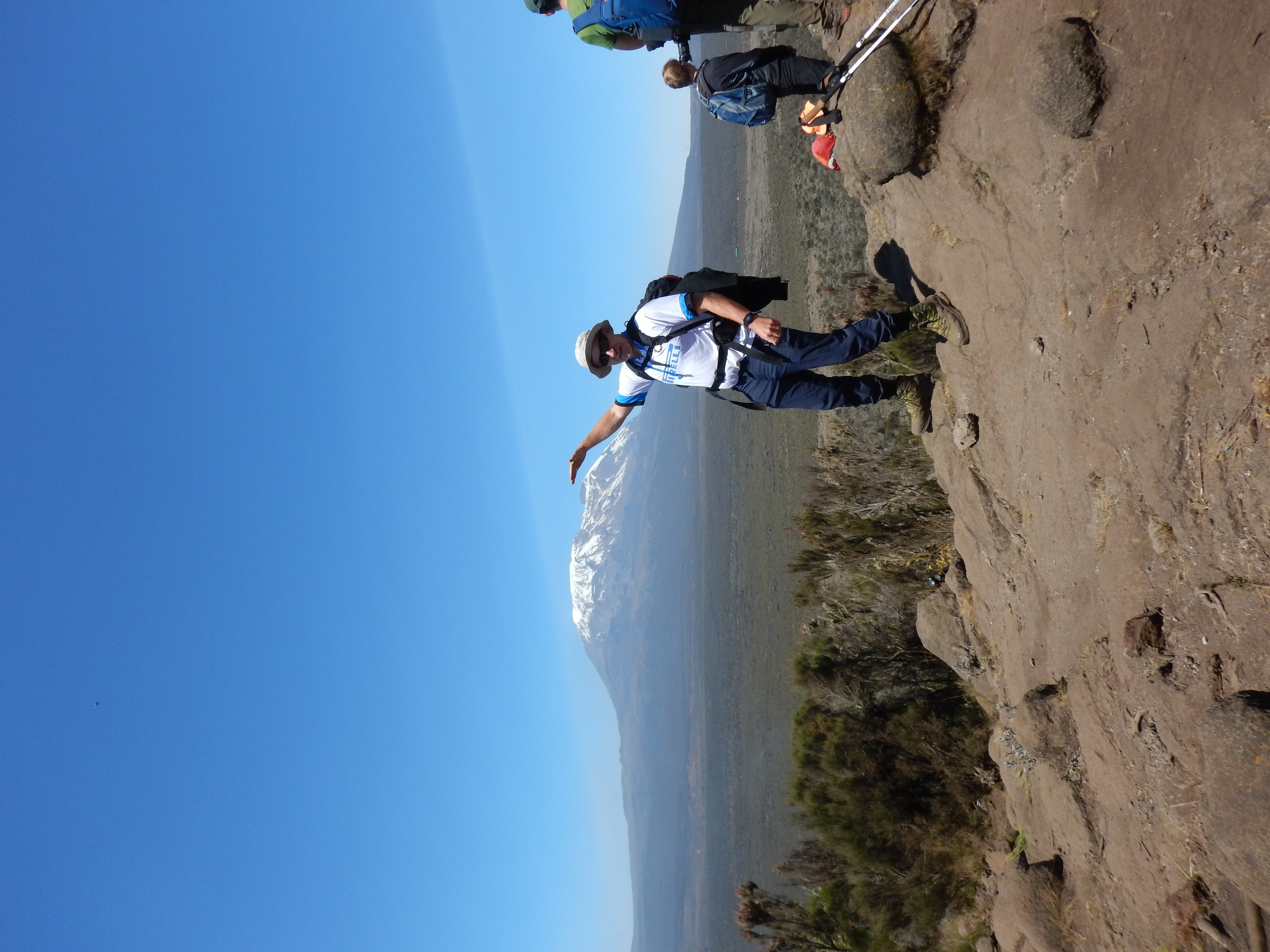
A lunch in the sun on the Shira Plateau with clear views all the way to the top, followed by the best hour's sleep I'd had all trip. Davis's advice, delivered more than once over the coming days, was simple: sleep when you can, eat when you can. It isn't always possible at altitude, but you take it when it's offered.
And Pole Pole of course. Slowly slowly.
By day three I was onto the same routine for the third day running. We climbed four hours to 3,800m, then pushed on an extra hour to 4,000m purely for the acclimatisation — up and back down again to the same camp, which is the mountain's way of making you earn height twice. A slight headache, masked with ibuprofen. Oxygen levels were checked every morning; mine held steady.
A freezing morning that turned, briefly and memorably, into disaster when I managed to empty my pee bottle inside the tent rather than outside it, adding a fresh layer of dampness to the cold.
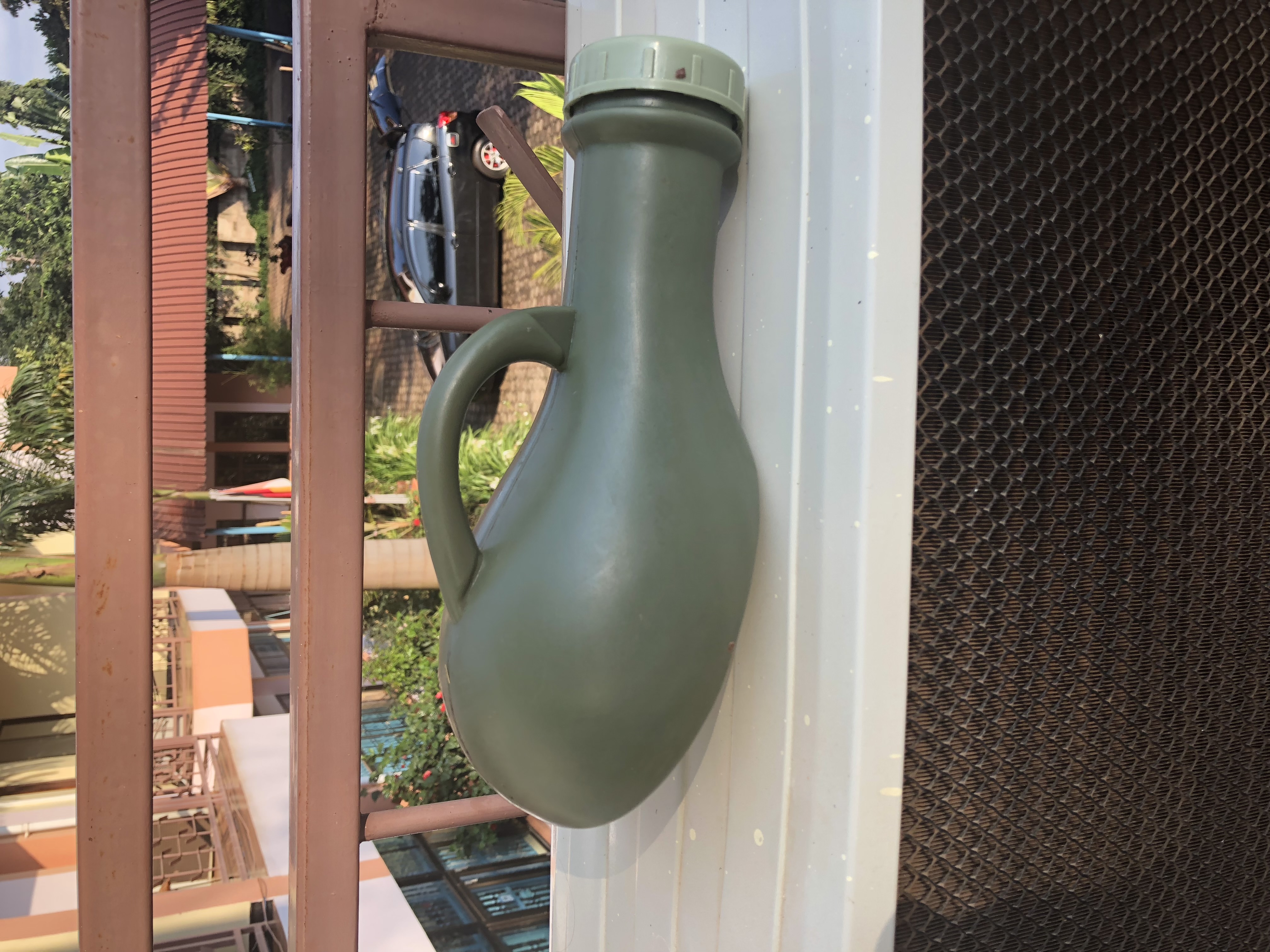
Altitude, the pills you take to counter it, and age make you pee more often in the night.
When the sun finally came up properly, the warmth was immediate and real in a way that's hard to describe — something about being in Africa, that human ancestry, and the relief of the sun returning providing instant warmth.
Day four got to me. It was the highest we'd climbed yet, and altitude sickness caught up with me shortly after eating. I fell behind the rest of the group, and the guides quietly took my pack and led me back to camp by a route that kept us out of the sun. An afternoon nap I hadn't expected to need turned out to be exactly what fixed it — Davis's mantra again, rest when you can, even if actual sleep won't come. By dinner my readings were back to normal. "All part of the acclimatisation process," Davis said. He was right, though I didn't fully believe him until the next test came.
Summit night
Eleven pm. A huddle, a minute of silence, and then we set off into a night with no moon at all. One of the two doctors was struggling early and needed frequent stops; we rested every ninety minutes or so, just long enough to drink hot sweet tea from the guides' flasks — my own water bottle had frozen solid and was useless. Davis led from the front and started singing and chanting to keep everyone moving. The other guides picked it up, and somehow it worked.
By three-quarters of the way up, the sun rose over Mount Meru in the distance, and it was the best view of the entire night. I felt strong at that point — feet fine, breathing steady, genuinely confident I'd make it. We reached the crater rim and could see both the summit ahead and a stream of other climbers converging from the more popular southern routes, all of us funnelling toward the same point at the top.
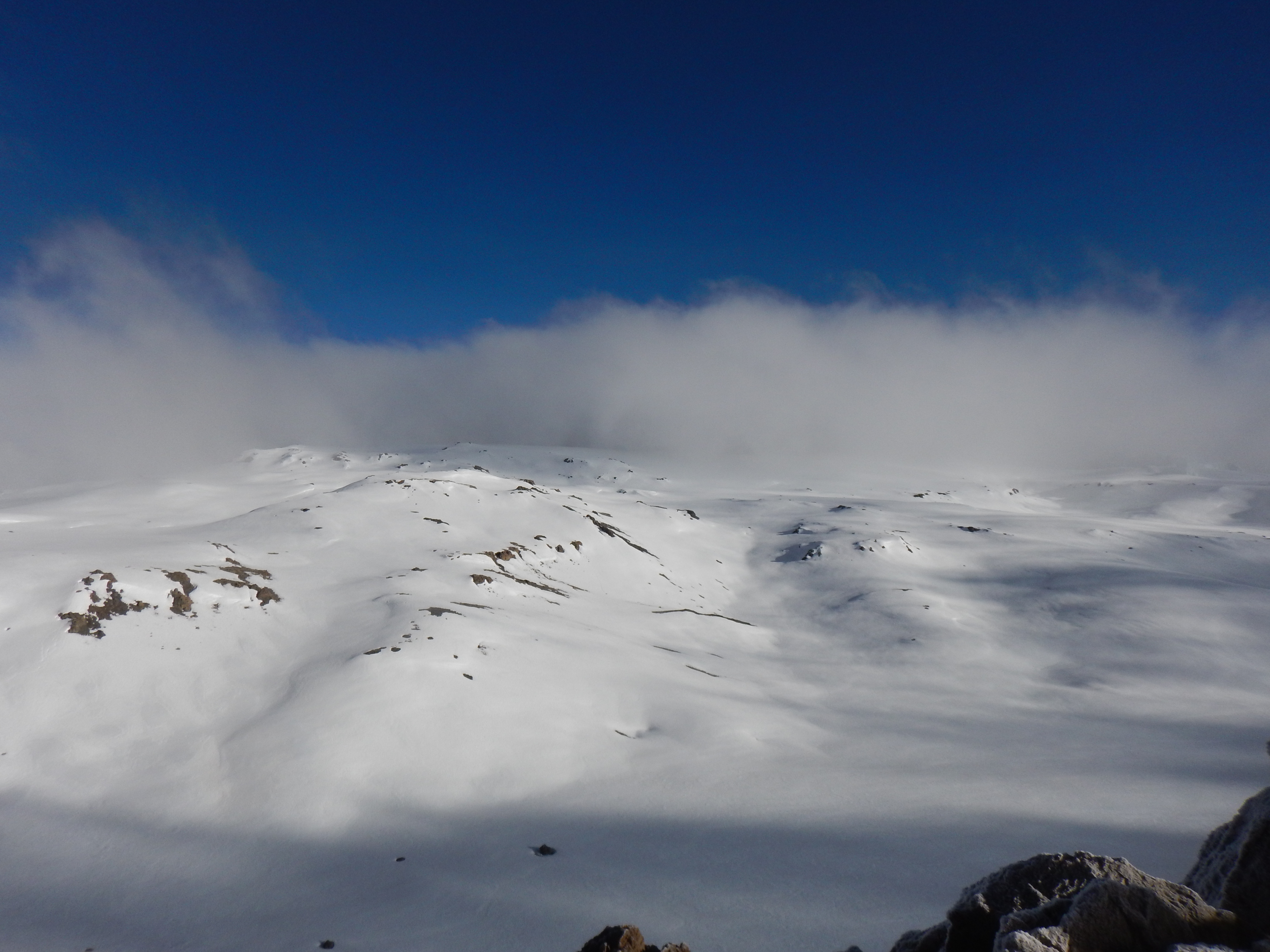
That's when Veena said she couldn't go on and asked if she could turn back. I told her no, and handed her an energy gel instead: if you need it, it'll taste good. If it tastes shit, you didn't need it after all. Davis backed me up — only five more minutes, he said.
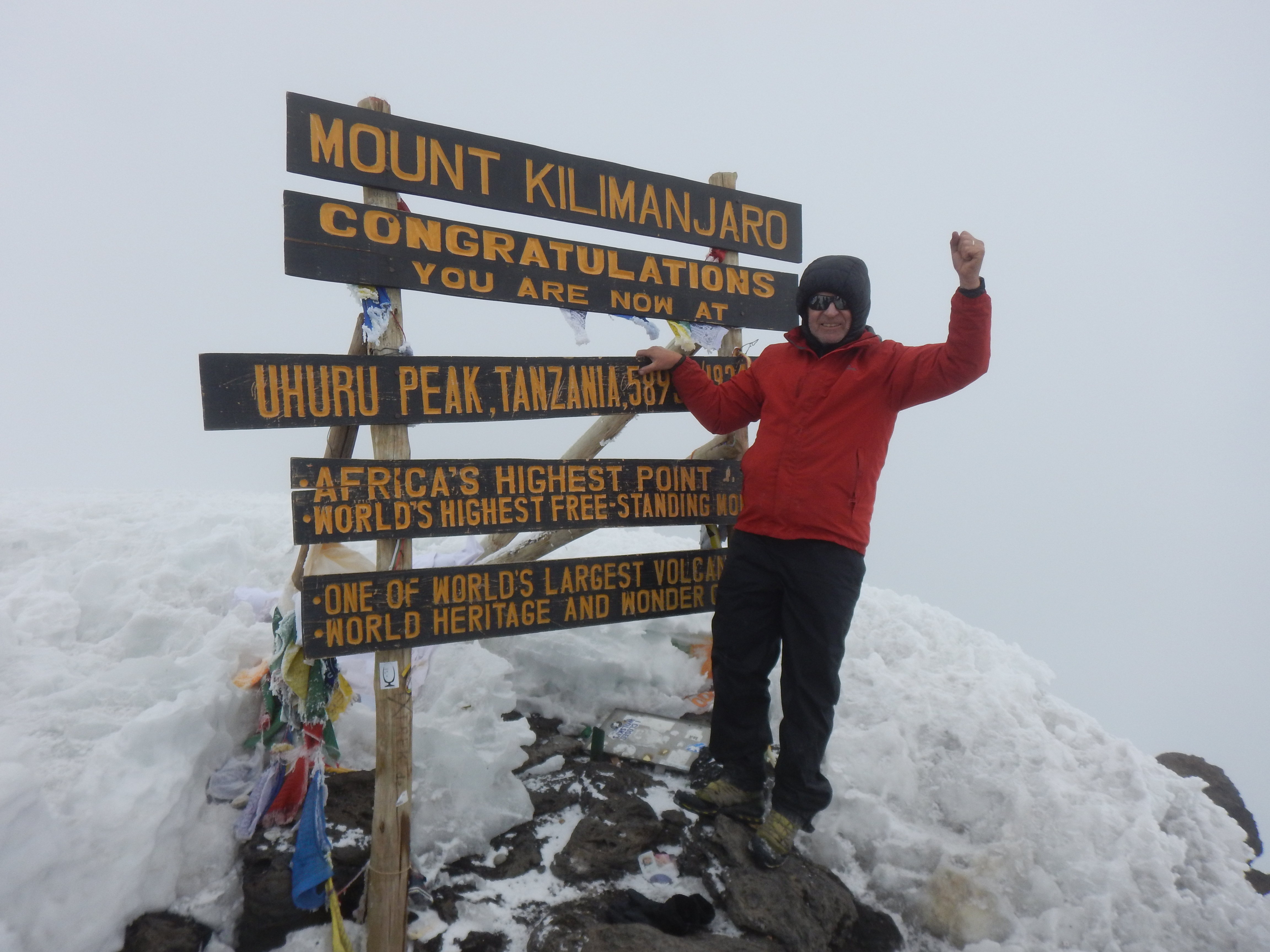
It was an hour. And a genuinely difficult crossing over the glacier, but we made it. The summit was empty when we arrived. We had it entirely to ourselves for ten minutes — photographs, belief and relief — before Davis, ever practical, started shepherding everyone back down toward thinner, warmer air.
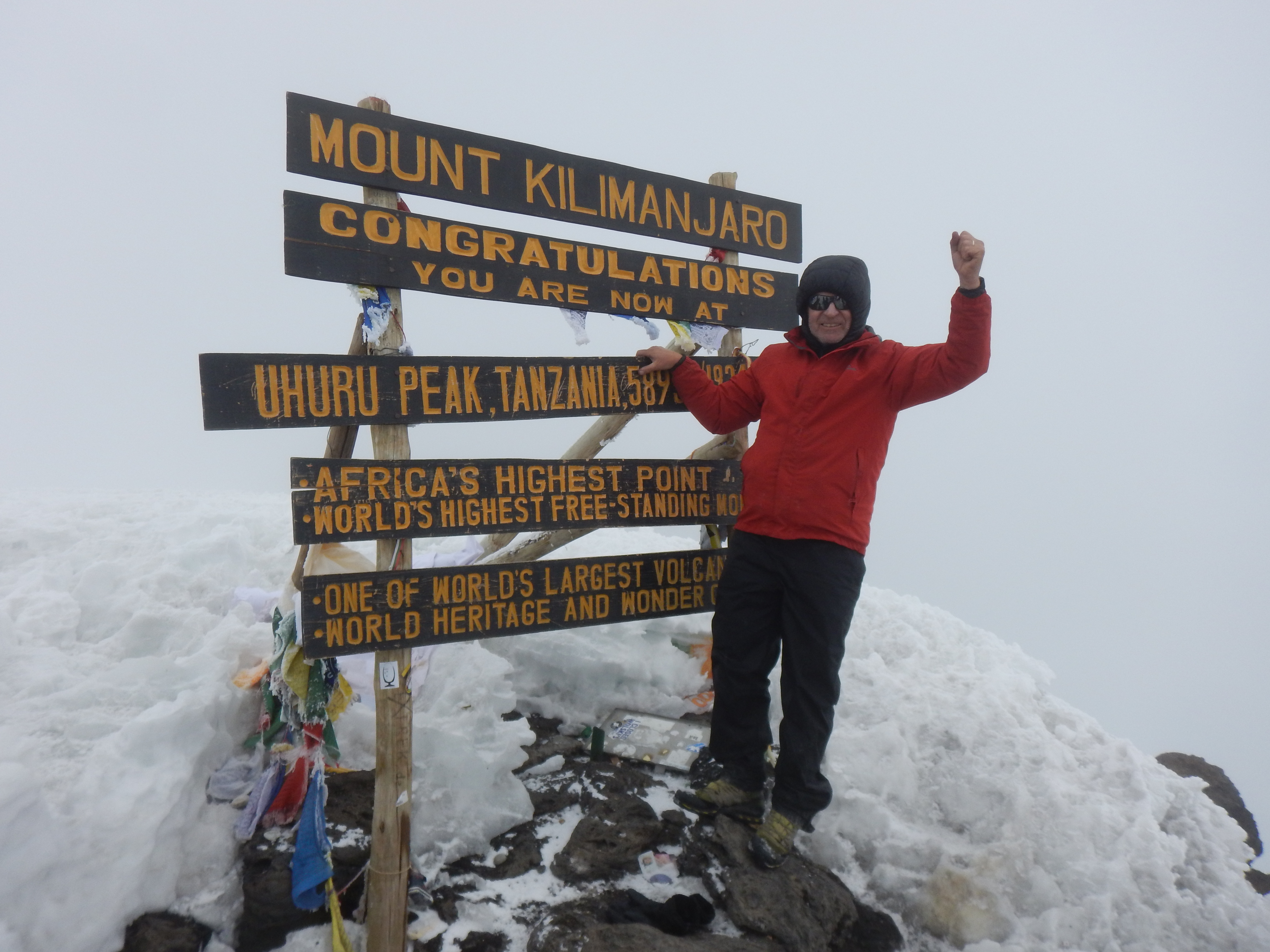
The first stretch of descent was like a ski slope made of dust and scree instead of snow, and Sam and I slalomed down it, feeling the beneficial effects of the drop in altitude almost immediately. Other climbers were struggling around us, being helped down or possibly still helped up — it was impossible to tell which direction some of them were headed. Within our own group, one person needed an oxygen cylinder and a fast, supported descent; another was given a steroid injection and, from that point on, practically flew down the mountain. Everyone made the summit. Everyone made it back down. But not far enough down, not yet — Veena's blood oxygen was still only 67%, so lunch was rushed and we kept descending straight afterward.
By then we were three hours behind schedule, the night's camp had to be relocated, and it was six in the evening before we finally arrived — nineteen hours of trekking, start to finish, and by some distance the coldest night of the entire trip. Nobody needed persuading to sleep.
Down
The last morning began with frost on the ground and an early wake-up. Over breakfast we settled the tips, and then came the porters' send-off — songs, words of thanks, and a line of handshakes as each porter's tip was announced in turn. It's a genuinely moving ritual, and a reminder of just how many people had spent the last week quietly making sure five strangers didn't fall off a mountain.
Six more hours of slippery downhill track followed. At the park gate there was a first cold beer and a boot-washing station, followed swiftly by the news that the actual pickup point was still another hour of muddy track away. We paid twenty dollars for a minivan to close the gap instead, and that was that — Kilimanjaro, from airport-lounge chaos to muddy minivan, done.
Nineteen hours on summit night alone; the better part of a week to get there and a day to come back down. Somewhere in between, a bin liner over cold feet, a pee bottle in the wrong place, an energy gel that tasted exactly as good as it needed to, and a sunrise over Mount Meru.
Related Stories
Kinabalu, Borneo
Costa Rica's highest point
Comments
Enable JavaScript to read and post comments.